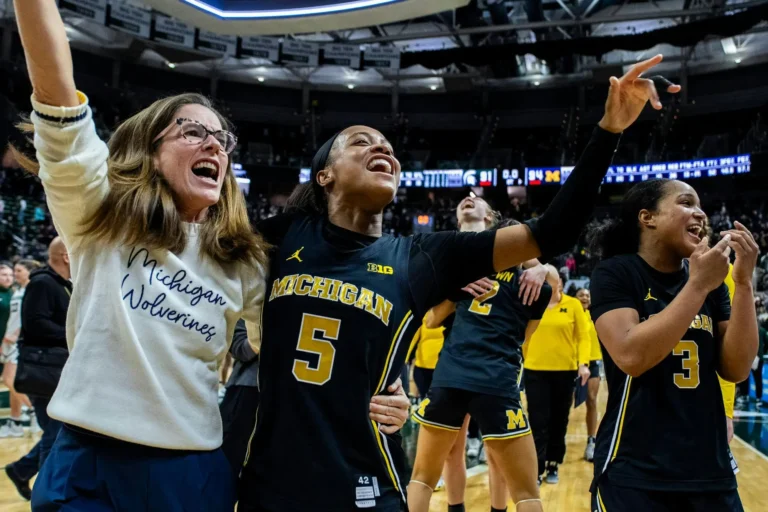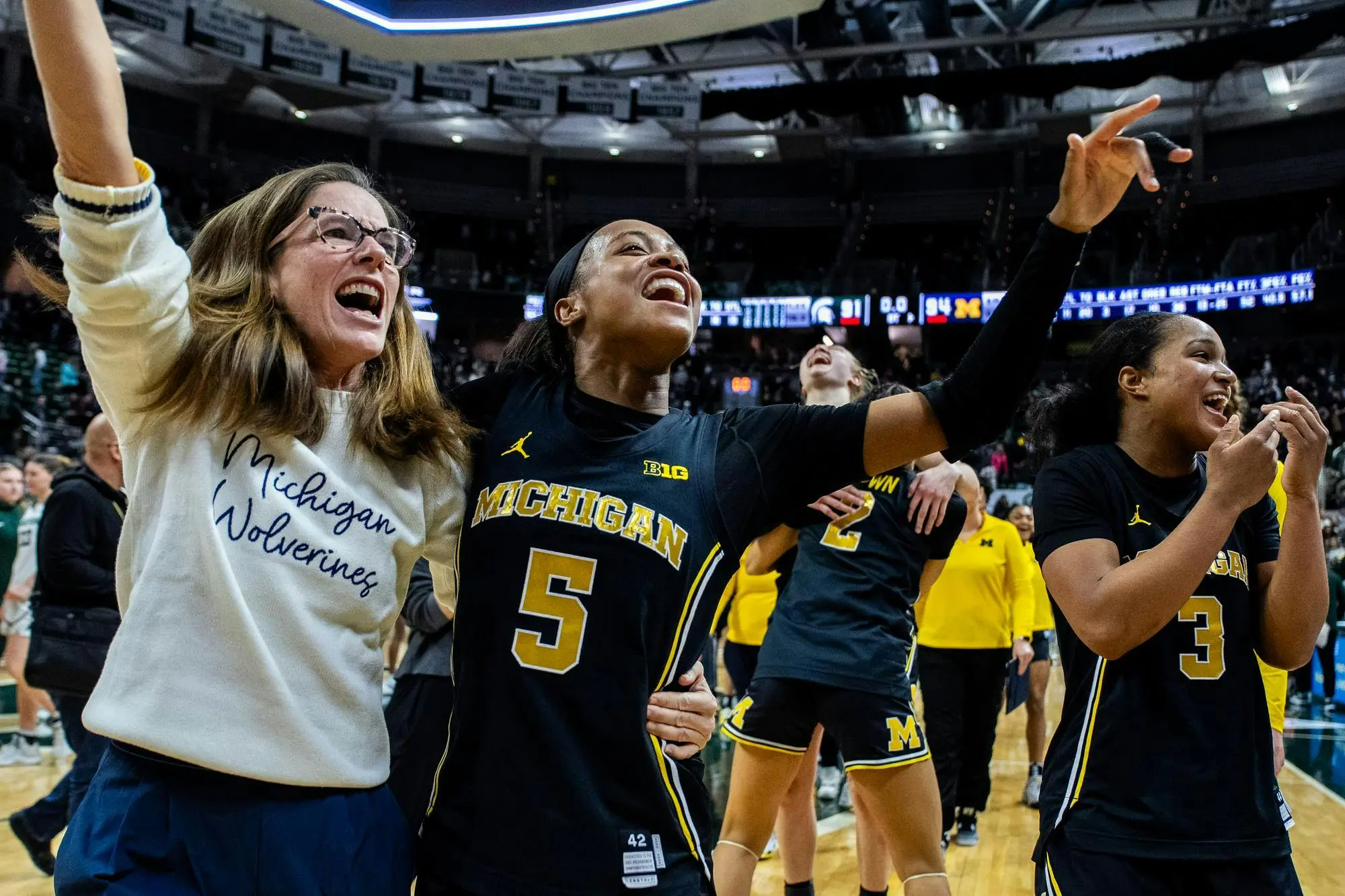
There is a quiet confidence that has settled into Crisler Center this season, a sense that something significant is being built in Ann Arbor. The michigan women’s basketball 2026 basketball team has turned the 2025–26 season into one of the most compelling stories in the Big Ten, finishing the regular season with a sterling 28–6 overall record and a 15–3 conference mark — good enough for second place in one of the most brutally competitive women’s basketball conferences in the country.
Second place, in any other year, might sound like a footnote. Not this year. Not in this Big Ten. To sit at 15–3 in a conference that also houses Iowa, Ohio State, Minnesota, Maryland, Michigan State, and the historic juggernaut that is undefeated UCLA is to have earned something real. The Wolverines did not stumble into this position. They fought for it, game by game, with a roster that blends experience, athleticism, and a system that head coach Kim Barnes Arico has spent over a decade carefully constructing.
This is the story of a season that may well be remembered as the moment Michigan women’s basketball stopped being a program on the rise and became, definitively, a program that has arrived.
The Big Ten Landscape: Playing in the Most Competitive Conference in America
To understand what Michigan has accomplished this season, you must first appreciate the terrain. The Big Ten Women’s conference in 2025–26 is arguably the deepest in the nation.
Leading the standings is UCLA at 34–1 overall, 18–0 in conference — a genuinely historic season for the Bruins, who have gone undefeated in Big Ten play in their second year in the conference and appear to be on a collision course with the top seed in the NCAA Tournament. Behind them, though, the competition does not soften. Michigan’s 15–3 conference record places them in a two-way tie for second with Iowa, both teams sitting ahead of Ohio State (27–8, 13–5) and Minnesota (24–9, 13–5).
The rest of the top half of the conference — Maryland, michigan women’s basketball 2026 State, Washington, Illinois — all carry records that would earn them NCAA Tournament bids in virtually any other year. Michigan navigated this gauntlet with remarkable consistency, losing only three conference games all season and demonstrating the defensive resilience and offensive adaptability that have become the hallmarks of Barnes Arico’s program.
The three conference losses are instructive rather than damning. UCLA’s unbeaten conference run means that almost every team in the Big Ten carries at least two losses to the Bruins. The question was always who could limit the damage everywhere else — and Michigan did exactly that, going 15–3 when the rest of the field around them was absorbing punishment from every direction.
Kim Barnes Arico: Building a Legacy in Ann Arbor
Kim Barnes Arico is entering her fourteenth season at Michigan, and it is not hyperbole to say that the 2025–26 campaign represents the clearest articulation yet of everything she has been building. Barnes Arico arrived in Ann Arbor in 2012 with a reputation as an elite recruiter and a fierce competitor, and she has delivered on both fronts throughout her tenure.
Her coaching philosophy is rooted in defensive intensity and positional versatility. Michigan under Barnes Arico rarely relies on a single dominant scorer to carry the load. Instead, the Wolverines play a brand of basketball that distributes the offensive burden widely, with multiple players capable of stepping up on any given night. This approach makes Michigan genuinely difficult to scout and prepare for — opponents can take away one option and find three others ready to punish the adjustment.
This season has been the fullest expression of that philosophy. On nights when the inside game has been challenged, Michigan has found answers from the perimeter. When three-point shooting has gone cold, the Wolverines have consistently gotten to the free-throw line and converted. The adaptability has been the defining characteristic of a team that has now won 28 games against the second-toughest schedule in the Big Ten.
Barnes Arico’s recruiting class that built this team also deserves recognition. The roster features a blend of homegrown talent developed through Michigan’s program and targeted portal acquisitions that have provided immediate impact. This reflects the modern reality of college basketball — programs that thrive are those that can identify both long-term developmental prospects and plug-and-play contributors from the transfer market.
Season Overview: How Michigan Built Its Record
The Wolverines opened the 2025–26 season with clear non-conference ambitions, scheduling opponents that would test them before the Big Ten grind began. That preparation paid dividends. By the time conference play arrived, Michigan was battle-hardened and playing at a level of cohesion that programs often spend full seasons trying to achieve.
The early months of the season established the team’s defensive identity. Michigan consistently held opponents below their scoring averages, relying on length, switching ability, and a willingness to guard the full 94 feet when necessary. Opponents who expected to push pace against the Wolverines found themselves dealing with a team that could match intensity in either direction — playing slow and methodical when the game called for it, or pushing tempo when defensive stops created transition opportunities.
Offensively, the Wolverines demonstrated range and versatility throughout the season. Inside scoring, mid-range efficiency, and three-point shooting all contributed to a balanced attack that proved difficult to contain. Michigan did not lead the Big Ten in any single offensive category, but their consistency across multiple metrics made them one of the most difficult teams to gameplan against in the conference.
The 28–6 record contains wins over teams that will appear in the NCAA Tournament field, and it contains losses that — viewed in context — came against elite competition on difficult nights rather than representing systemic breakdowns. This is a team that has proven it can play with anyone in the country.
The Big Ten Tournament and NCAA Tournament Outlook
With the regular season in the books at 28–6, Michigan enters the Big Ten Tournament as one of the top seeds, positioned for a deep run that could further bolster their NCAA Tournament resume and seeding.
The Wolverines’ 15–3 conference record and 28 overall wins place them firmly in the conversation for a top-four seed nationally. Bracketologists entering March have consistently projected Michigan as a 2 or 3 seed, with the potential to rise if they make a deep run in the conference tournament. A Big Ten Tournament championship — an accomplishment that would require defeating Iowa, Ohio State, and potentially UCLA — would be a program-defining achievement and would all but lock in a number two seed for the NCAA Tournament.
In terms of NCAA Tournament potential, this Michigan team has the defensive profile to survive and advance deep into March. Teams that reach the Elite Eight and Final Four in recent years have consistently shared a common trait: the ability to defend at an elite level for 40 minutes against physically imposing opponents. Michigan has demonstrated that capability throughout the 2025–26 season.
The pathway to a Final Four run will require Michigan to win four games against opponents seeded anywhere from 1 through 7, each progressively more difficult. Given the Wolverines’ performance against elite Big Ten competition this season — including wins over multiple teams that will earn NCAA Tournament bids — there is genuine reason to believe they are capable of that run.
The Big Ten Context: Second Best Is Still Elite
Some programs might bristle at finishing second in their conference. For Michigan women’s basketball, it is worth pausing to appreciate what second place in the 2025–26 Big Ten actually means.
The conference this season has been exceptional. UCLA’s undefeated 18–0 conference run represents one of the most dominant single-season performances in Big Ten women’s basketball history. Michigan’s 15–3 mark in that same conference is not a failure — it is an achievement that speaks to the program’s sustained quality over a grueling 18-game schedule.
Iowa’s matching 15–3 record means the Wolverines are deadlocked with one of the most storied programs in women’s college basketball history. Ohio State, at 13–5, finished a half-game behind Michigan. The margin between second and fourth in the Big Ten this season was two games. These are not soft programs being edged out by superior competition — they are genuine contenders, and Michigan more than held its own among them.
The broader Big Ten picture also shows Michigan State at 23–9, Washington at 22–11, and Illinois at 22–12 — all programs with NCAA Tournament aspirations. In this environment, Michigan’s 28–6 record stands as a clear statement of program quality.
What Makes This Team Special
Beyond the numbers, there are several qualities that make the 2025–26 Michigan Wolverines women’s basketball team worth watching closely as March arrives.
Defensive Toughness. Michigan has consistently made life difficult for opposing offenses throughout the season. The Wolverines challenge shots, protect the paint, and execute rotations with a discipline that reflects Barnes Arico’s emphasis on defensive fundamentals. In March, when games slow down and possessions become precious, this defensive identity will be one of Michigan’s most valuable assets.
Collective Offensive Identity. No team can gameplan against Michigan and simply eliminate one player. The Wolverines distribute responsibility widely, and their depth means that opponents face a different challenge every night. This collective approach also creates resilience — when one component of the offense isn’t clicking, others compensate.
Experienced Leadership. The upperclassmen on this roster have played in NCAA Tournaments before. They know what March basketball demands, and that experience is genuinely difficult to teach. When games become physical and possessions become tense, the Wolverines have the personnel to stay composed.
Coaching Continuity. Barnes Arico’s fourteen years at Michigan have produced institutional knowledge and system depth that young programs simply cannot match. Every player on this roster has been developed within the same system, speaks the same basketball language, and executes the same principles. That cohesion shows in close games — Michigan has demonstrated all season the ability to win games decided by single digits.
Looking Ahead: Michigan’s Place in the National Conversation
The 2025–26 season has done something important for Michigan women’s basketball beyond just the wins and losses: it has placed the program in the national conversation in a way that demands sustained attention.
michigan women’s basketball 2026 is experiencing a moment of extraordinary growth and visibility. The sport has never been more watched, more discussed, or more commercially significant. Programs that establish themselves as elite destinations in this environment will reap recruiting benefits for years to come. Michigan’s performance this season — 28 wins, second in the Big Ten, a legitimate NCAA Tournament contender — sends a message to every recruit in the country that Ann Arbor is a place where championships are chased, not merely hoped for.
The Big Ten Tournament begins soon. The NCAA Tournament bracket will be revealed in mid-March. Michigan enters both events as a genuine threat to advance deep and, on the right day, to do something historic.
At 28–6, second in the Big Ten with a 15–3 conference mark, the Wolverines have done everything asked of them this season. The work of a year — Barnes Arico’s careful construction, the players’ commitment, the defensive identity, the collective offense — now faces its ultimate test.
About the Author