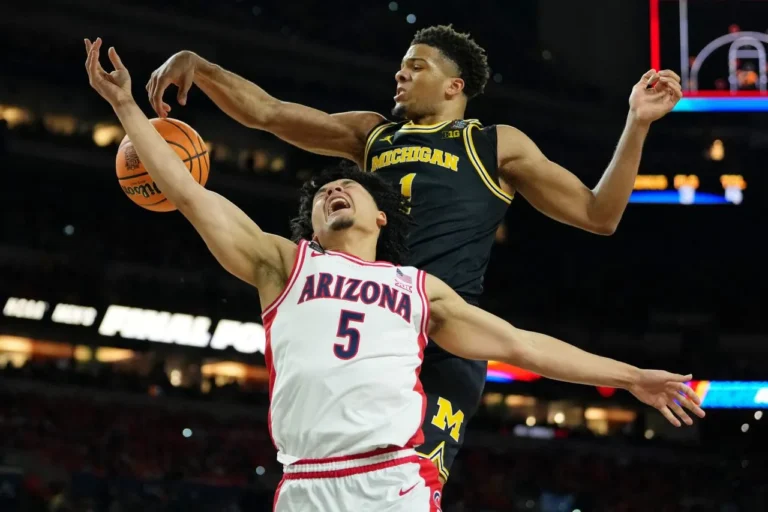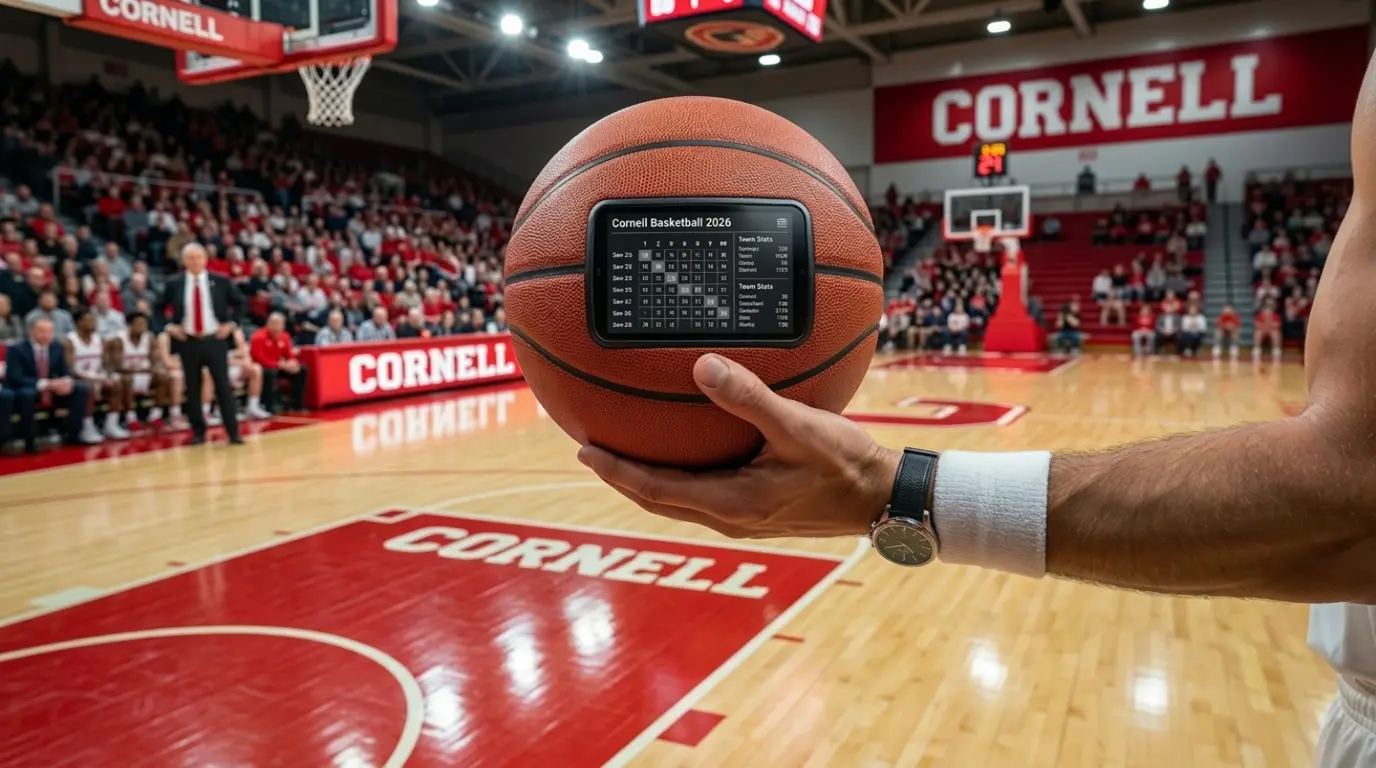
The 2025-26 Cornell University men’s Cornell Basketball 2026 season will be remembered not for its seamless trajectory toward tournament glory, but for something far more compelling—a dramatic comeback narrative that nearly saw the program on the outside looking in before an inspired late-season surge delivered the Big Red to the Ivy League Tournament championship game and ultimately, a path to March Madness.
As the calendar turns toward mid-March 2026 and Ithaca hosts the Ivy League Basketball Tournament for the first time in program history, the Cornell Big Red enter Newman Arena as the fourth seed—a position many in the team would have gladly accepted three weeks earlier when their tournament hopes appeared to be slipping away.
A Bumpy Start: The Impossible Beginning
No program wants to start conference play 0-3. For Cornell, that reality set in early, casting an ominous shadow over what many had hoped would be a year of sustained success. Yet what made the Big Red’s early stumble particularly noteworthy was how rare it actually was. Cornell became only the second team in Ivy League history to start 0-3 in conference play and still reach Ivy Madness, joining only the 2017-18 Cornell squad that finished 6-8 in league play.
Head coach Jon Jaques ’10, the man who orchestrated that previous resurrection from the doorstep of tournament elimination, understood the magnitude of the challenge facing his program. But more importantly, he understood the resilience within his locker room. “The little things, the sacrifices, are all worth it when you get to play in March,” Jaques emphasized to his team during those uncertain January days. Those words would prove prophetic.
The 2025-26 season, while finishing with an overall record of 15-12 and a league record of 8-6, showcased a team that learned to play its most complete Cornell Basketball 2026 when it mattered most. The regular season record masks the true narrative: an offensive juggernaut that hit its stride precisely when tournament seeding was being determined.
The Senior Class Carries the Load
The engine of Cornell’s resurgence was powered by two exceptional senior guards: Cooper Noard and Jake Fiegen. This pair became the most reliable two-way contributors in the Ivy League, embodying the kind of experience and stability that can overcome early-season inconsistency.
Noard, the Glenbrook South High School product from Illinois, completed an extraordinary collegiate career. By season’s end, he had become the 29th 1,000-point scorer in Cornell program history, reaching that milestone in dramatic fashion with a buzzer-beating three-pointer against Brown in January. The senior captain ascended to No. 17 on the school’s career scoring list with 1,177 total points, also climbing to fifth all-time in three-pointers made with 227.
Playing an average of just 27.3 minutes per contest—a figure that ranked 23rd in the Ivy League—Noard achieved remarkable efficiency. He led the Ivy League in scoring with 18.5 points per game in conference play, demonstrating elite offensive production despite his modest playing time. His season high of 34 points came in a non-conference loss at Kent State in November, followed by a commanding 30-point performance on Senior Day against Brown when the stakes were highest.
More impressively, Noard reached double figures in every game against Division I opponents, recording 10 games with at least 20 points. His 68.5% two-point shooting efficiency ranked 45th nationally—a staggering figure that illustrates how central he was to Cornell’s inside-outside offensive balance.
Jake Fiegen, similarly a senior captain, experienced what many college basketball scouts would call a “breakout” final season. Named to the First Team All-Ivy selection, Fiegen ranked fifth in conference scoring with 16.8 points per game. His field goal percentage of 54.3% stood at eighth in the league, while his 3-point shot selection (2.22 makes per game for seventh in the conference) and 3-point percentage (40.8%, 11th in the league) revealed a guard who could keep opposing defenses honest from beyond the arc.
In Ivy League games specifically, Fiegen’s production intensified further. He led the conference in scoring during league play with an 18.5 points per game average on scintillating 57-42-72 shooting splits. The 6-foot-4 guard added 5.1 rebounds per game, providing a physical presence despite not being the team’s tallest player.
When Fiegen recorded a career-high 31 points against Brown in late January—the game where Noard hit his 1,000-point milestone three-pointer—it signaled that this senior class possessed the offensive firepower to overcome any opponent. He would demonstrate that capability again on March 7 against Dartmouth, scoring 22 points on an efficient 7-of-9 shooting in just 21 minutes.
The Supporting Cast: Depth and Versatility
While Noard and Fiegen anchored the backcourt, Cornell’s championship aspirations were buoyed by a deep bench that created genuine matchup problems for Ivy League opponents. Head coach Jaques had built a roster with 11 players averaging nine minutes or more and 10 players averaging at least 3.5 points per game—a distribution that frustrated opponents trying to game-plan for single matchups.
Junior Jacob Beccles emerged as the team’s third scoring option, contributing 17 points and adding five assists and five rebounds on Senior Day against Brown. His versatility and improved decision-making were crucial, particularly in the final weeks when Cornell’s pace-controlled offense became more deliberate and half-court oriented.
Senior Adam Hinton averaged 12.5 points per game and provided consistent scoring in double digits. In the record-breaking 111-90 demolition of Dartmouth on March 7, Hinton scored 16 points, highlighting his ability to step up in marquee matchups.
Josh Baldwin, another senior starter, brought rebounding prowess and defensive intensity despite his 6-foot-5 frame—taller than most of his teammates but still undersized by traditional college basketball standards. On March 7 against Dartmouth, Baldwin scored 11 points in a starting lineup that featured no players taller than Baldwin himself, illustrating how unconventional Cornell’s approach truly was.
The bench depth extended to names like Anthony Nimani, who chipped in nine points in the comeback win at Brown after missing three Ivy contests due to injury, and Kaspar Sepp, whose defensive versatility and rebounding prowess proved invaluable in a small-ball system.
The X-Factor: Three-Point Shooting and Offensive Efficiency
Cornell’s entire identity in 2026 centered on an offensive philosophy that would have seemed reckless a generation ago but has become nearly commonplace in modern basketball: launch unprecedented volumes of three-pointers while maintaining complementary two-point efficiency. The Big Red proved devastatingly effective at both dimensions.
Consider the statistical anomaly: the team finished ninth nationally in two-point field goal percentage at 59.7%, while simultaneously maintaining the Ivy League’s top-ranked three-point shooting prowess. This combination—elite shooting from inside and outside the arc—created an offensive profile that prevented opponents from playing traditional pick-and-roll defense.
The March 7 destruction of Dartmouth exemplified this approach. Cornell made 19 three-pointers, breaking a 61-year-old school record for points in an Ivy League game (previously held by the 1965 team that scored 110 against Dartmouth). More remarkably, this marked the fifth game this season in which Cornell sank at least 19 three-pointers—a feat that had occurred just five times total in program history entering the season. Eight of the last 10 games in school history with 19 or more three-pointers came during the first two seasons under head coach Jon Jaques.
Yet the Dartmouth game also revealed a crucial adjustment Jaques made following the team’s early struggles. While shooting 19 three-pointers, Cornell simultaneously went 22-for-29 on two-point attempts (81.5%)—a display of floor spacing and interior dominance that showcased how the team had evolved tactically. Late in the season, Jaques had deliberately slowed the pace at times, moving away from the breakneck transition game the team had relied upon in previous years, instead favoring a more deliberate half-court offense where the team’s shooting and cutting prowess could be maximized.
The Defensive Evolution: Not Pretty, But Practical
If offense was Cornell’s primary strength, defense represented the team’s greatest vulnerability. The Big Red ranked 336th nationally in defensive efficiency, finishing dead last in the Ivy League at 1.16 points per possession allowed—a statistic that would normally signal catastrophic defensive issues.
Yet the apparent defensive deficiency must be contextualized. Cornell’s small lineup—with no player approaching 7 feet and most guards on the undersized side by college standards—created inherent defensive constraints. The Big Red couldn’t camp in the paint and protect the basket; they had to play perimeter-oriented defense, which meant giving up driving lanes and relying on three-point shooting contests.
The approach was counterintuitive but pragmatic. Recognizing the defensive ceiling created by their roster construction, Jaques and his staff made the critical adjustment: “What we were doing clearly wasn’t working, and to the guys’ credit, they bought in 1,000% on what we needed to do,” the coach reflected after the transformation took hold. The team moved away from the high-paced, transition-heavy approach that had been their trademark, instead controlling tempo and managing possessions more carefully to avoid giving up explosive moments in open floor.
The shift worked. After allowing over 100 points in three consecutive Ivy games, Cornell steadied the ship defensively and won eight of its final 11 conference games.
The Clutch Moments: Building Tournament Momentum
If any single victory encapsulated Cornell’s season, it was the February 27 win against Yale. The Big Red, facing the two-time defending champion Bulldogs and top seed in the upcoming tournament, fell behind only to mount a comeback that culminated in a three-pointer from senior Jake Fiegen with just seconds remaining. The final score: 72-69.
That game proved crucial. Not only did it provide immediate evidence that Cornell could beat elite Ivy competition in a high-stakes environment, but it also delivered a psychological blow to Yale while simultaneously validating Cornell’s tournament credentials. The Big Red wouldn’t have to wait until the final day of the season to clinch their Ivy Madness spot—they could enter Selection Day with confidence restored.
Senior Day on February 28 saw Cornell defeat Brown 86-80 in a game that showcased the excellence of the senior class. Cooper Noard’s 30 points led the way, while Fiegen added 16 and the team’s seniors combined for 64 points. More significantly, the victory—coupled with favorable results elsewhere in the league—officially clinched the No. 4 overall seed.
The regular season finale against Dartmouth on March 7 was ostensibly inconsequential. Cornell’s seeding was locked, and head coach Jaques rested his starters as the game progressed. Yet the explosive offensive performance—111 points scored in a road Ivy game, breaking an institutional record established 61 years prior—sent a powerful message heading into tournament week.
“It’s super special to me as a basketball fan myself,” reflected student Kiran Chaudhry-Bishop ’29 about hosting the tournament. “It’s big for the Cornell program.” The excitement on campus was palpable. As another student, Teddy Sandler ’27, noted: “Being able to play meaningful games in March is truly special. As a fan, it’s something I don’t take for granted.”
The Tournament Stage: Historic Hosting and Championship Dreams
The 2026 Ivy League Basketball Tournament marked a watershed moment for Cornell athletics. For the first time in program history, Newman Arena hosted the conference’s annual “Ivy Madness” tournament—the automatic gateway to the NCAA Division I Men’s Basketball Championship.
Unlike many other NCAA conferences that established tournaments in earlier decades, the Ivy League didn’t introduce its basketball tournament until 2017, introducing what would become known as “Ivy Madness.” Since then, the conference has rotated host sites annually, finally arriving in Ithaca for the first time.
“It’s been cool to see the tournament rotate to all the schools in the Ivy League,” Jaques reflected. “Just thrilled we get a chance to showcase Cornell University and obviously showcase Ivy League basketball.” The coach, who had played on the 2010 Cornell team that made the Sweet 16 of the NCAA Tournament, understood the historical weight of playing March basketball—and hosting it was an honor not lost on the program.
The tournament structure pitted Cornell in the No. 4 seed against top-seeded Yale in a semifinal matchup on March 14. Harvard, the No. 2 seed, faced No. 3 Penn in the other semifinal. The winners would compete for the championship on March 15, with the victor receiving the Ivy League’s automatic bid to the NCAA Tournament.
Looking Ahead: The Path to March Madness
Cornell stood on the precipice of its sixth NCAA Tournament appearance in program history, and its first since the memorable 2010 Sweet 16 run. Two victories would place the program back in the national postseason conversation.
Yale presented a formidable challenge. The Bulldogs had posted a 23-5 regular season record and a dominant 11-3 Ivy League mark, earning the tournament’s top seed. Senior Nick Townsend led the Bulldogs, contributing across all statistical categories as a centerpiece of Yale’s success.
Yet Cornell had proven it could beat Yale in high-pressure environments. The February 27 victory—on a last-second Fiegen three-pointer in a low-possession game designed to limit Yale’s size advantage—provided a blueprint. “Yale will be a handful,” Jaques acknowledged. “They have a lot of size on us, most teams do. We have to really commit to protecting the paint, but obviously that’s very risky against one of the top three-point shooting teams in the country.”
The challenge was real, but so was the opportunity. A team that seemed destined to miss March entirely just weeks earlier now stood ready to resurrect their season in front of an energized home crowd.
The Broader Context: Ivy League Basketball Excellence
For all the focus on Cornell’s remarkable journey, it’s worth noting the broader excellence of Ivy League basketball in 2026. The Princeton women’s team captured the outright conference title, while the men’s league continued to showcase competitive basketball that observers genuinely rate among the best mid-major leagues in the country.
“The basketball in our league is awesome,” Jaques noted. “It’s competitive. It’s one of the best mid-major leagues in the country.”
This wasn’t hyperbole. The final standings reflected a conference where parity reigned supreme, where no team could coast through February, and where March tournaments were genuinely wide-open competitions.
Conclusion: The Sweet Sound of Redemption
The 2025-26 Cornell men’s basketball season will endure as a testament to resilience, adjustment, and the power of late-season execution. A team that began Ivy play 0-3 transformed itself into tournament contenders, powered by two elite senior guards, a versatile supporting cast, and a coaching staff willing to abandon what wasn’t working in favor of pragmatic solutions.
As Newman Arena prepares to host the Ivy League Tournament for the first time, as students fill the stands with renewed enthusiasm, and as the Big Red take to the court against Yale on March 14, the narrative has come full circle. What appeared to be a season heading toward regret transformed into one of opportunity.
Whether Cornell ultimately claims its sixth NCAA Tournament berth remains to be written. But regardless of the tournament outcome, the 2025-26 season will be remembered as the year the Big Red discovered how to play their best basketball when everything was at stake—and proved that records don’t need to be pristine to be remembered fondly.
About the Author